What to Track in a Trading Journal (And What to Ignore)
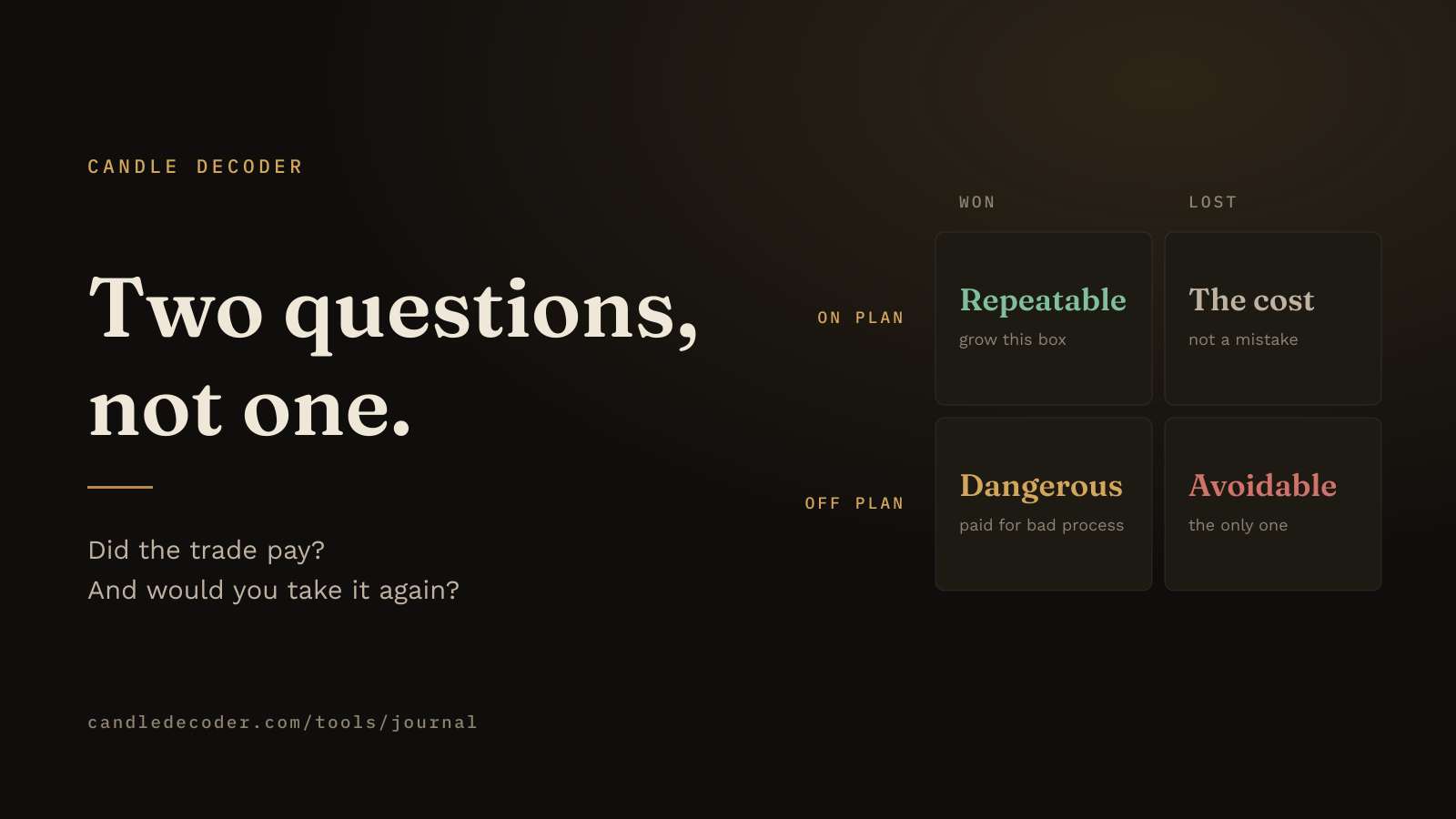
Most journals record what happened and teach the wrong lesson. The six fields that actually change how you trade are mostly about the decision, not the result.
2026-09-16
Longer pieces on the method, the instrument, and how US30 actually behaves. For dated session reads, see the breakdowns.

Most journals record what happened and teach the wrong lesson. The six fields that actually change how you trade are mostly about the decision, not the result.
2026-09-16
Confused about US30 point value? Learn exactly how much 1 point is worth on CFDs, YM futures, and different brokers—plus how lot size changes your risk.
Ethan Miller · 2026-08-28
Learn how interactive forex courses turn trading theory into practical execution through real-time chart decisions, market structure practice, and deliberate repetition.
Ethan Miller · 2026-08-23

London builds the range, New York breaks it. A side-by-side look at how each session moves the Dow — and which one actually fits how you trade.
Ethan Miller · 2026-08-22

Wondering what CPI does to the Dow Jones (US30)? Learn why the 8:30 AM release causes massive volatility and how to trade the institutional order flow safely.
Ethan Miller · 2026-08-21

Same market, different math — the structural reasons US30 and the S&P 500 sometimes move in opposite directions.
Ethan Miller · 2026-08-18

Passing a prop firm challenge is less about finding the perfect indicator and more about risk engineering, psychological discipline, and understanding the specific mechanics of the evaluation.
Ethan Miller · 2026-08-09
Discover what actually moves US30 (Dow Jones). Learn how price-weighting, Fed decisions, high-impact data, and institutional flows drive index volatility.
Ethan Miller · 2026-08-03
Trading US30 at 3:00 AM is different from 9:30 AM. Learn how Dow Jones session times behave, from the Asian range to the New York open, to time your trades.
Ethan Miller · 2026-08-03